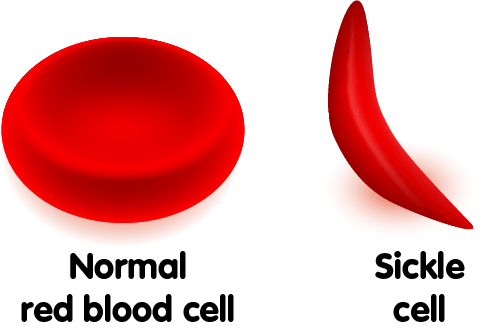
Sickle cell anemia, or sickle cell disease (SCD), is a genetic disease of the red blood cells (RBCs).If you have SCD, there is a problem with your hemoglobin. Hemoglobin is a protein in red blood cells that carries oxygen throughout the body. A normal red blood cell are shaped like discs, which gives them the flexibility to travel through even the smallest blood vessels. However, with sickle cell disease the red blood cell have an abnormal shape resembling a sickle. These cells do not bend and move easily and can block blood flow to the rest of your body.This makes them sticky and rigid and prone to getting trapped in small vessels, which blocks blood from reaching different parts of the body.
What is Sickle Cell Trait?
People who inherit one sickle cell gene and one normal gene have sickle cell trait(SCT). People with SCT usually do not have any of the symptoms of sickle cell disease (SCD), but they can pass the trait on to their children.
How Sickle Cell Trait is Inherited
- If both parents have SCT, there is a 50% (or 1 in 2) chance that any child of theirs also will have SCT, if the child inherits the sickle cell gene from one of the parents. Such children will not have symptoms of SCD, but they can pass SCT on to their children.
- If both parents have SCT, there is a 25% (or 1 in 4) chance that any child of theirs will have SCD. There is the same 25% (or 1 in 4) chance that the child will not have SCD or SCT.
sickle cell anemia symptoms
Symptoms vary from person to person .Symptoms can include:
- pain in the joint and bones
- fever
- abdominal pain
- severe anemia
- jaundice, which is yellowing of the eyes and skin
- swelling and pain in hands and feet
- frequent infections
- vision problem
- delayed growth
- breathing difficulties
Sickle cell crisis
The terms “sickle cell crisis” or “sickling crisis” may be used to describe several independent acute conditions occurring in patients with SCD, which results in anaemia and crises that could be of many types, . Most episodes of sickle cell crises last between five and seven days.
Vaso-occlusive crisis
The vaso-occlusive crisis is caused by sickle-shaped red blood cells that obstruct capillaries and restrict blood flow to an organ, resulting in ischemia, pain, necrosis and often organ damage.
Splenic sequestration crisis
Splenic sequestration crises are acute, painful enlargements of the spleen, caused by intrasplenic trapping of red cells and resulting in a precipitous fall in haemoglobin levels. Sequestration crises are considered an emergency. If not treated, patients may die within 1–2 hours due to circulatory failure.
Acute chest syndrome
Acute chest syndrome is define by at least two of these signs or symptoms: chest pain, fever, pulmonary infiltrate or focal abnormality, respiratory symptoms, or hypoxemia.It is the second-most common complication and it accounts for about 25% of deaths in patients with SCD. Most cases present with vaso-occlusive crises, and then develop acute chest syndrome.
Aplastic crisis
Aplastic crisis is usually caused by a parvovirus B19 infection, also called fifth disease or slapped cheek syndrome. Parvovirus B19 is a very common infection, but in sickle cell disease, it can cause the bone marrow to stop producing new red cells for a while, leading to severe anemia.
Haemolytic crisis
Haemolytic crises are acute accelerated drops in haemoglobin level. The red blood cells break down at a faster rate. This is particularly common in people with G6PD deficiency. Management is supportive, sometimes with blood transfusions.
How is sickle cell disease (SCD) diagnosed?
A blood test can show if you have SCD or sickle cell trait. All states now test newborns as part of their screening programs, so treatment can begin early.
People who are thinking about having children can have the test to find out how likely it is that their children will have SCD.
Doctors can also diagnose SCD before a baby is born. That test uses a sample of amniotic fluid (the liquid in the sac surrounding the baby) or tissue taken from the placenta (the organ that brings oxygen and nutrients to the baby).
Treatment of Sickle cell anemia
A number of different treatments are available for SCD: treatment depends on the symptoms or crisis of the patient
- Rehydration with intravenous fluids helps red blood cells return to a normal state. The red blood cells are more likely to deform and assume the sickle shape if you’re dehydration.
- Treating underlying or associated infections is an important part of managing the crisis, as the stress of an infection can result in a sickle cell crisis. An infection may also result as a complication of a crisis.
- Blood transfusions improve transport of oxygen and nutrients as needed. Packed red cells are removed from donated blood and given to patients.
- Supplemental oxygen is given through a mask. It makes breathing easier and improves oxygen levels in the blood.
- Pain medication is used to relieve the pain during a sickle crisis. You may need over-the-counter drugs or strong prescription pain medication like morphine.
- Immunizations can help prevent infections. Patients tend to have lower immunity.
Bone marrow transplant has been used to treat sickle cell anemia. Children younger than 16 years of age who have severe complications and have a matching donor are the best candidates.
sickle cell anemia complications
- stroke
- gallstone
- pulmonary hypertension
- iron overload
- blood borne infection
- retinal disease
- chronic renal failure
sickle cell anemia home care treatment
There are things you can do at home to help your sickle cell symptoms:
- Eat an adequate amount of fruits, vegetables, and whole-wheat grains. Doing so can help your body make more RBCs.
- good hydration at all time, by drinking adequate water/fluid
- Exercise regularly and reduce stress to reduce crises,
- Use heating pads for pain relief.
- avoidance of common precipitation factors such as malaria,dehydration,stress, pneumonia and exposure to extreme weather
- Take folic acid supplements, as recommended by your doctor.
 HEALTH STATUS