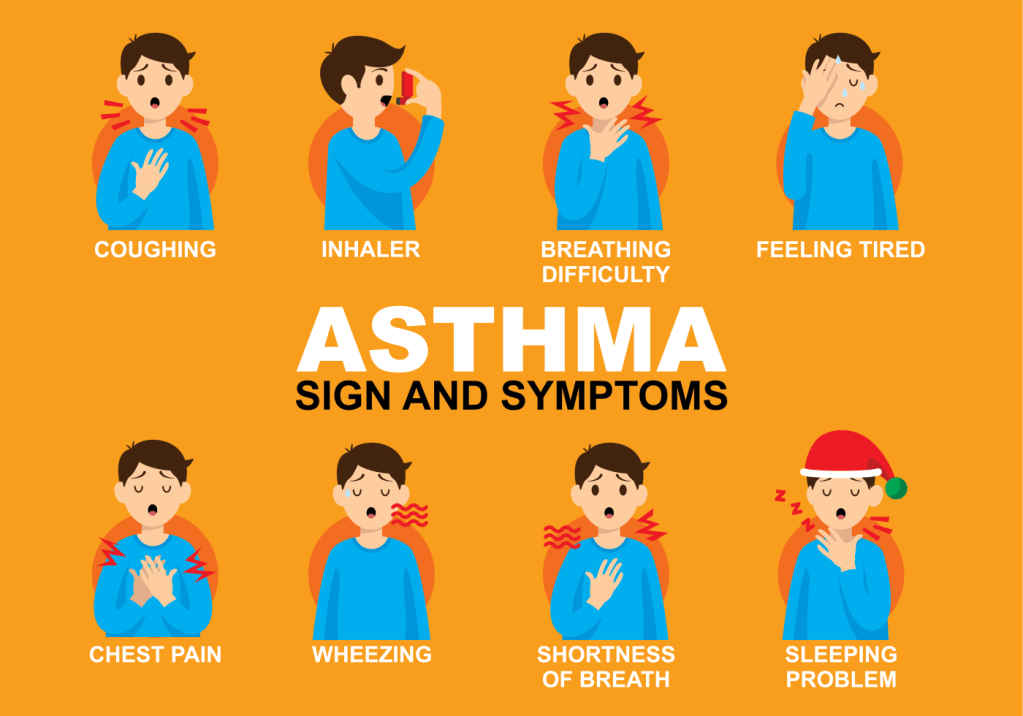
Asthma is an inflammation of the bronchi, which causes swelling and narrowing of the airways and the production of extra mucous.this can make breathing difficult.
Asthma is thought to be caused by a combination of genetics and environmental factor
Asthma Symptoms
Asthma symptoms vary from person to person. You may have infrequent asthma attacks, have symptoms only at certain times — such as when exercising — or have symptoms all the time.
Asthma signs and symptoms include:
- Shortness of breath
- Chest tightness or pain
- Wheezing when exhaling, which is a common sign of asthma in children
- Cough (often at night)
What Is an Asthma Attack?
an asthma attack is when your symptoms suddenly get worse. Your airways tighten, swell, or fill with mucus. These can come on gradually or suddenly and may be life-threatening. People who have severe asthma often get asthma attacks more often.
During the asthma attack, the lining of the airways also becomes swollen or inflamed and thicker mucus — more than normal — is produced. . Other symptoms of an asthma attack may include:
- severe wheezing when breathing both in and out
- coughing that wont stop
- Very rapid breathing
- Chest tightness or pressure
- Tightened neck and chest muscles, called retractions
- Difficulty talking
- Pale, sweaty face
- Blue lips or fingernails
Asthma Causes and Triggers
Things that might make you more likely to have asthma include
- Allergens such as pollens, pet dander,mold dust
- Irritants like strong odors from perfumes or cleaning solutions
- Air pollution
- smoking
- infections like cold, flu, and sinusitis
- Cold air or changes in the weather, such as temperature or humidity
- Gastroesophageal reflux disease (GERD)
- Strong emotions such as laughter, sadness, or stress
- some Medications such as aspirin
- Food preservatives called sulfites, found in things like shrimp,beer and wine, dried fruits, and bottled lemon and lime juices
Asthma Risk factors
A number of factors are thought to increase your chances of developing asthma. They include:
- Having a blood relative with asthma, such as a parent or sibling
- Having another allergic condition, such as atopic dermatitis — which causes red, itchy skin — or hay fever — which causes a runny nose, congestion and itchy eyes
- Being overweight
- Being a smoker
- Exposure to secondhand smoke
- Exposure to exhaust fumes or other types of pollution
- Exposure to occupational triggers, such as chemicals used in farming, hairdressing and manufacturing
Asthma Treatment
Asthma treatment is based on two important goals:
- relief of symptoms
- preventing future symptoms and attacks from developing
Depending on how severe your asthma is, your doctor may prescribe you one or more types of asthma medications;
- A reliever medicine relaxes the airway muscles and makes it easier to breathe when you have asthma symptoms If you find you are using your reliever more often than two times a week, you should see your doctor.
- A preventer medicine helps to reduce the inflammation in your airways. It should be taken every day, even when you have no symptoms.
- A symptom controller relaxes the airway muscles for 12-24 hours, helping to reduce the symptoms of asthma. Symptom controllers are always used with an inhaled corticosteroid medicine (preventer).
- A combination medication contains both a preventer and a symptom controller in one inhaler.
Treatment should be designed to ensure your asthma is well controlled. This means:
- you don’t have symptoms on more than two days a week
- you don’t need your reliever medication on more than two days a week
- your asthma doesn’t limit what you can do
- you don’t have symptoms at night or when you wake up
Asthma complications
Asthma which is not carefully managed can lead to:
- constant fatigue
- pneumonia
- frequent leave from work or school due to constant asthma flare-ups
- increased mucus production
- thickening and narrowing of bronchial tubes which can become permanent leading to respiratory failure
- respiratory failure
- severe chest pain
Proper treatment makes a big difference in preventing both short-term and long-term complications caused by asthma.
Asthma Prevention
While there’s no way to prevent asthma, you and your doctor can design a step-by-step plan for living with your condition and preventing asthma attacks.
- Follow your asthma action plan. With your doctor and health care team, write a detailed plan for taking medications and managing an asthma attack. Then be sure to follow your plan.Asthma is an ongoing condition that needs regular monitoring and treatment. Taking control of your treatment can make you feel more in control of your life.
- Get vaccinated for influenza and pneumonia. Staying current with vaccinations can prevent flu and pneumonia from triggering asthma flare-ups.
- Identify and avoid asthma triggers. A number of outdoor allergens and irritants — ranging from pollen and mold to cold air and air pollution — can trigger asthma attacks. Find out what causes or worsens your asthma, and take steps to avoid those triggers.
- Monitor your breathing. You may learn to recognize warning signs of an impending attack, such as slight coughing, wheezing or shortness of breath.But because your lung function may decrease before you notice any signs or symptoms, regularly measure and record your peak airflow with a home peak flow meter. A peak flow meter measures how hard you can breathe out. Your doctor can show you how to monitor your peak flow at home.
- Identify and treat attacks early. If you act quickly, you’re less likely to have a severe attack. You also won’t need as much medication to control your symptoms.When your peak flow measurements decrease and alert you to an oncoming attack, take your medication as instructed. Also, immediately stop any activity that may have triggered the attack. If your symptoms don’t improve, get medical help as directed in your action plan.
- Take your medication as prescribed. Don’t change your medications without first talking to your doctor, even if your asthma seems to be improving. It’s a good idea to bring your medications with you to each doctor visit. Your doctor can make sure you’re using your medications correctly and taking the right dose.
- Pay attention to increasing quick-relief inhaler use. If you find yourself relying on your quick-relief inhaler, such as albuterol, your asthma isn’t under control. See your doctor about adjusting your treatment
 HEALTH STATUS