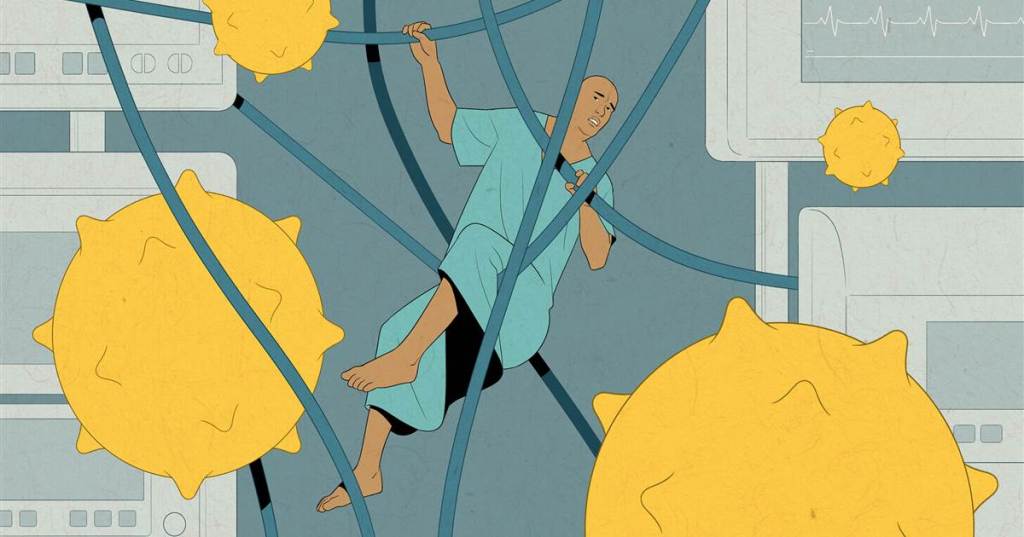
An important aspect of the pandemic is being largely overlooked: What happens when it deters you from getting unrelated care that you need?
“You have a growth between your L3 and L4 vertebrae.”
The statement from my doctor didn’t seem real when he said it on the phone. It still didn’t when I met with the surgeon a few days later and he explained the scans, surgery and recovery process in more detail. Because of the tumor’s size, he told me I only had one or two months until the chance of permanently losing sensation in my right side increased. In fact, he warned me, I’d likely already lost some sensation, but my level of pain was hiding it.
His diagnosis made me angry with myself for waiting to seek care. I knew something was wrong, but my fear of the coronavirus, the overwhelmed health care community and my false hope that I’d just get better made me wait. I will never know what that time cost me.
The whole world is consumed with COVID-19, understandably so. There is endless talk of the risks and inadequate resources. But one important conversation is largely overlooked: What happens when the coronavirus prevents you from getting unrelated care that you need? Just because you don’t have it yourself doesn’t mean it can’t affect your health negatively.
Fear of exposure to COVID-19 is keeping people from seeking sorely needed medical help. Moreover, the stigma that you’re burdening the system or endangering others when you do so means guilt and anxiety are also discouraging people from getting treated.
At the heart of this conflict is the question of what essential care is. There’s a longstanding debate on whether we, as a country, are over-medicalized. How many of the visits, tests and procedures we get are medically necessary? How much do patients’ anxieties, doctors’ desires to avoid lawsuits and the system’s misguided fee-for-service incentive structure result in excess?
 HEALTH STATUS