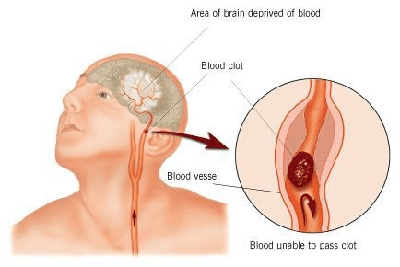
Stroke is a medical condition which occurs as a result of poor blood flow to the brain due to a blocked blood vessel(ischemic stroke) or bleeding in the brain(hemorrhagic stroke) preventing oxygen from reaching the brain and causing brain cells to die quickly.
A Stroke is also called a cerebrovascular accident, CVA, or “brain attack.”
types of stroke
There are three main types of strokes
- Ischemic stroke: This is the most common type of stroke, making up 90% of all cases. A blood clot prevents blood and oxygen from reaching an area of the brain.
- Hemorrhagic stroke: This occurs when a blood vessel ruptures. These are usually the result of aneurysms.
- Transient ischemic attack (TIA): This occurs when blood flow to a part of the brain is inadequate for a brief period of time. Normal blood flow resumes after a short amount of time, and the symptoms resolve without treatment.
Risk factors of stroke
These people are at higher risk of getting stroke.
- Family history: Stroke risk is higher in some families because of genetic health issues, such as high blood pressure,diabetes etc.
- Obesity: People with BMI of 30 is at higher risk of getting stroke.
- Sex: Men are more likely to get stroke than women. However, stroke is deadlier in women than in men. This may be because strokes are most common in older adults, and women usually live longer than men.
- Age: As you gets older your risk of getting stroke increases.
- Diet: unhealthy diet is bad for your health. Consuming too much salts, unhealthy fats (trans fat, saturated fat) also increases your risk.
- Inactive: Lack of exercise also increase your risk for stroke.
- Race: Africans and African Americans have a higher risk than other race.
- Alcohol: Too much alcohol consumption puts you at risk. Alcohol should be taking in moderation especially in women.
- Smoking tobacco puts you at higher risk.
- Some medical conditions like Diabetes, Hypertension, sickle cell anemia,high lipidemia, heart valve defect, irregular heart beat.
stroke symptoms
General signs and symptoms of a person having a stroke
- Severe,sudden headache
- Numbness or weakness in the arm, face, and leg, especially on one side of the body
- Trouble speaking or understanding speech
- Paralysis
- Confusion
- Slurring speech
- Dizziness
- Vision problems, such as trouble seeing in one or both eyes with vision blackened or blurred, or double vision
- Loss of balance or coordination
stroke symptoms women
Stroke signs that occur more often in women include:
- Nausea or vomiting
- Hallucination
- Pain
- General weakness
- Shortness of breath or trouble breathing
- Fainting or losing consciousness
- Seizures
- Confusion, disorientation, or lack of responsiveness
- Sudden behavioral changes, especially increased agitation
stroke symptoms in men
Men and women can have some of the same signs and symptoms of stroke. However, some stroke symptoms occur more often in men. These include:
- Drooping on one side of the face or an uneven smile
- Slurred speech, difficulty speaking, and trouble understanding other speech
- Arm weakness or muscle weakness on one side of the body
treatment of stroke
Treatment of stroke depends on whether you are having an ischemic stroke or hemorrhagic stroke.
Ischemic stroke,medication is giving to help dissolve a clot and restore blood flow.A surgical procedure is done to remove a blood clot that doesn’t dissolve, or remove plaque in a blocked artery.
In hemorrhagic stroke a surgical procedure needs to be done to stop the bleed.Surgery can repair a weak or damaged blood vessel, remove blood from the brain, and reduce pressure in the brain.
Other Medications are also giving to control the occurrence of another stroke and also treat any underlying medical conditions
stroke complications
A stroke can sometimes cause temporary or permanent disabilities, depending on how long the brain lacks blood flow and which part was affected. Complications may include:
- Paralysis or loss of muscle movement. You may become paralyzed on one side of your body, or lose control of certain muscles.
- Difficulty talking or swallowing. A stroke might affect control of the muscles in your mouth and throat, making it difficult for you to talk clearly, swallow or eat.
- Memory loss or thinking difficulties. Many people who have had strokes experience some memory loss. Others may have difficulty thinking, reasoning, making judgments and understanding simple things
- Depression.
- Pain. Pain, numbness or other unusual sensations may occur in the parts of the body affected by stroke.
how to prevent a stroke
- Regular exercise
- Quit smoking
- Cut down on salts and unhealthy salts
- Reduce alcohol consumption.
Women are more likely than men to die from a stroke, so it’s important to be able to identify a stroke as soon as possible.
The sooner a person receives treatment for a stroke, the less damage is likely to happen.
Remember FAST if you think someone might be having a stroke:
- Face drooping
- Arm weakness
- Speech difficulty
- Time to call the ambulance.
 HEALTH STATUS
Leave a comment